
Biomarkers · Gut
Special Biomarker Study: Digestion and Intestinal Barrier
A comprehensive functional study of digestion, nutrient absorption and the intestinal barrier. It examines biomarkers including zonulin, calprotectin, LPS, IgA, digestive residues, elastase and short-chain fatty acids (SCFAs), helping to inform the next steps for digestive function.
€250
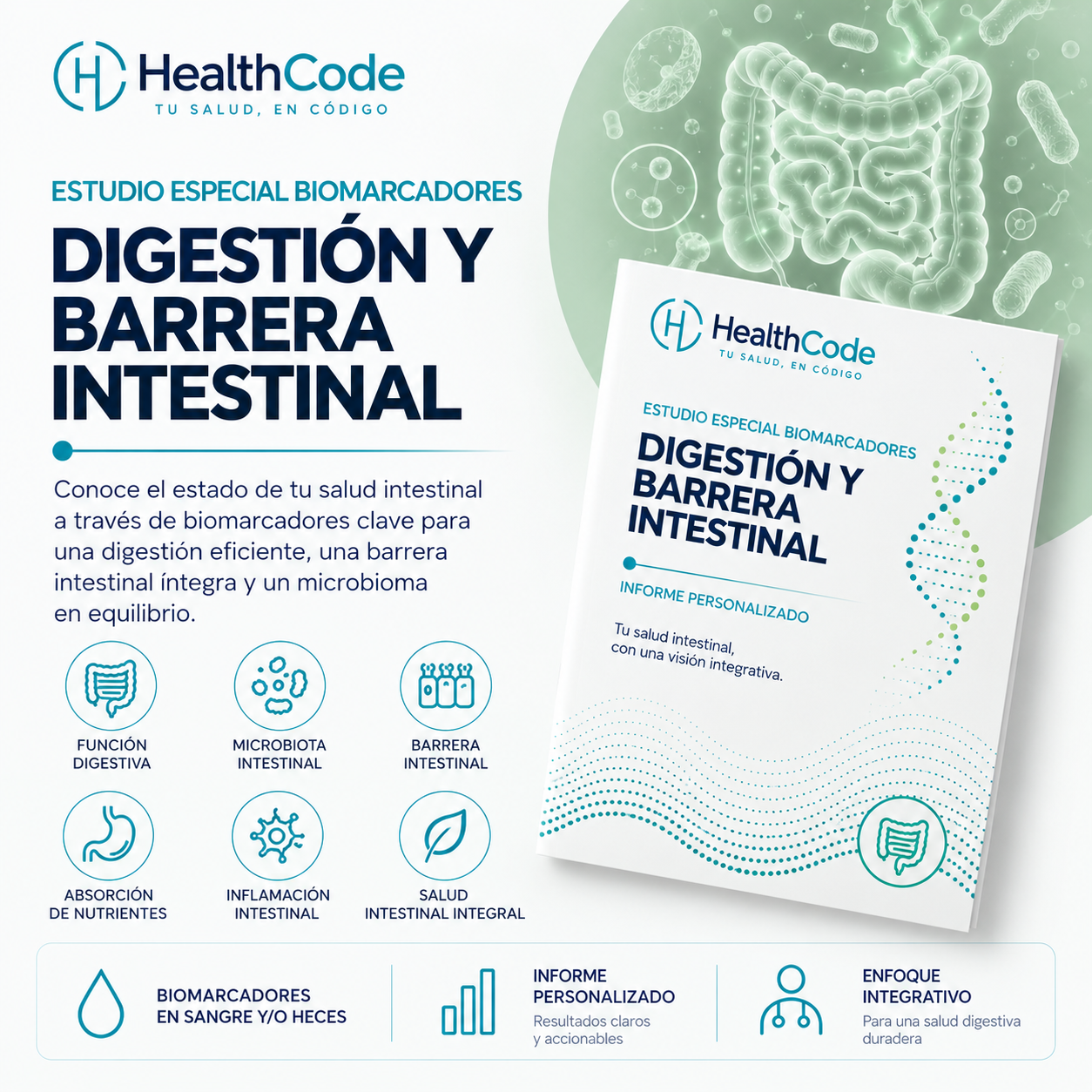
Visual example created with simulated data. It does not represent a real patient or the expected results of the service.
- Sample
- At-home collection following the kit instructions.
- Turnaround
- Kit in 48–72 working hours; results in approximately 15–20 working days after laboratory receipt.
- Interpretation
- Interpretation not included; see the product conditions.
The Special Biomarker Study: Digestion and Intestinal Barrier is a test designed to accurately evaluate the state of digestion, absorption, and the integrity of the intestinal barrier. Through a selected panel of key biomarkers, it allows us to determine whether the patient's intestine is prepared to effectively benefit from the nutritional or supplementation treatment we will recommend.
This approach makes it a baseline study that we recommend in most patients with digestive or systemic pathology, as it provides essential information: whether the intestine performs digestion and absorbs it correctly or whether, on the contrary, it is necessary to first implement a specific protocol of epithelial repair and improvement of digestive function.
What analyzes
- Zonulin, to evaluate the permeability and state of the intestinal barrier.
- Calprotectin, as a marker of intestinal inflammation.
- LPS-carrying microbiota (lipopolysaccharides), related to endotoxemia and immune activation.
- IgA secretor, which informs about the immunity of mucous membranes and the local intestinal defense.
- Digestive residues, which indicate the efficiency of digestion and nutrient absorption.
- Pancreatic elastase, to evaluate the contribution of the exocrine pancreatic function to the digestive process.
- Short-chain fatty acids (SCFAs), as a reflection of the fermentative activity of the microbiota and the production of trophic substances for the intestinal epithelium.
With this set of biomarkers we obtain a clear view of the global functioning of the digestive system and the intestinal barrier, which helps us to decide if the patient is in conditions to respond to a treatment or if first he needs to optimize intestinal function.
Who is it indicated for
- People with bloating, gas, changes in bowel movements or feeling of indigestion.
- Patients with extradigestive symptoms (fatigue, joint pain, headaches, skin changes...) in whom a possible relationship with the intestine and intestinal permeability is suspected.
- People with suspicion of nutrient malabsorption, unexplained weight loss, micronutrient deficiencies or low response to supplements despite a correct diet.
- Patients with autoimmune diseases, allergies, chronic inflammation or recurrent infections, where the intestinal barrier and endotoxemia can play a relevant role.
- People who want a functional gut assessment before starting advanced treatment or supplementation protocols.
How it works
- Make your purchase and receive in 48-72 working hours (approximately) the necessary material for the collection of the sample.
- Take the sample at home following the instructions included in the collection kit.
- We will receive your results report, interpret it and schedule you for a results consultation in approximately 15-20 business days from the laboratory's receipt of the sample.
WHAT INCLUDES?: Laboratory test + [Study results]
What this service DOES NOT include
- Personalized interpretation by a Health Code specialist with practical recommendations and treatment adapted 100% to your case.
- Online consultation 45′.
*Cost of the consultation + report of interpretation of results and treatment: 180€
Important information
This study is oriented to provide a functional assessment of digestion and intestinal barrier function, and must be interpreted by a healthcare professional within the clinical context of each patient. The decision to expand the study with complementary tests (microbiota, parasites, or other panels) will depend on the symptomatology, medical history, and therapeutic goal in each case.
Frequently asked questions
How many samples do I need to collect?
To perform the study, it is important to fill the tube up to the mark indicated in the kit. The sample must be collected from several different points on the feces, specifically from 8 different zones, so that the analysis is as representative as possible.
How do I store the sample until shipping is completed?
The sample must be kept following the instructions included in the collection kit. It is important that it is in a cool and dry place, without receiving direct lighting.
How is the sample sent?
Once collected, the sample must be prepared and sent according to the instructions that accompany the kit. The goal is that the transport is done in appropriate conditions to preserve the quality of the analysis.
Can I send the sample any day of the week?
Shipping must be carried out following the recommendations indicated in the kit to ensure proper receipt and processing of the sample. Therefore, it is advisable to review the instructions before scheduling pickup or shipping (Monday through Thursday, never on the eve of holidays).
If I take antihistamines, can I have the test done?
If your use is consistent over the long term, you should inform the healthcare professional responsible for your case so that they can take it into account as a factor that contributes to dysbiosis.
I have taken antibiotics, does it make sense to do the test on me?
Wait preferably 4 weeks from the last antibiotic dose.
If I take medication regularly, can I have the test done?
Yes, but you must mention it so that it is taken into account when interpreting the results.
Next step
Special Biomarker Study: Digestion and Intestinal Barrier
€250
Your cart and checkout are securely managed by the existing Health Code store.